
Linear Vibrating Feeder Basics: The Critical First Step in Aggregate Production Lines
Linear Vibrating Feeder Basics: The Critical First Step in Aggregate Production Lines
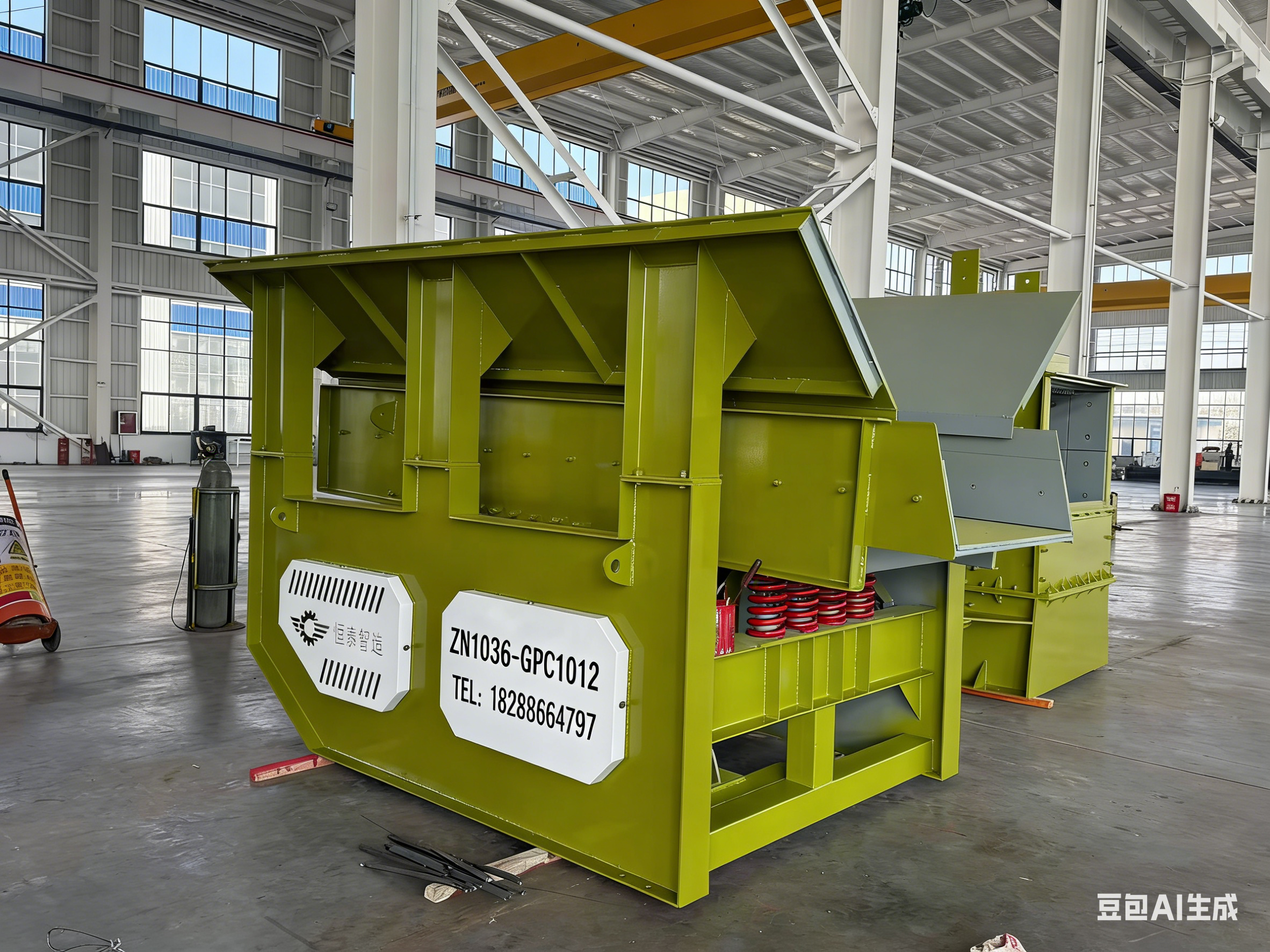
1.1 What Is a Linear Vibrating Feeder?
A Linear Vibrating Feeder is a mechanical device that uses the linear reciprocating motion generated by two vibrating motors to continuously, evenly, and consistently transfer bulk or granular materials from a storage hopper to downstream receiving equipment.
In modern aggregate production lines, it is an indispensable piece of equipment, often referred to as the “throat” of the production system due to its critical role in regulating material flow.
Compared with electromagnetic feeders and reciprocating feeders, the linear vibrating feeder adopts dual-motor self-synchronization technology. It does not require gear transmission, resulting in a simpler structure and easier maintenance. It is particularly suitable for handling large, high-hardness stone materials.
1.2 Its Critical Position in an Aggregate Production Line
In a typical aggregate production line, the linear vibrating feeder is installed between the hopper and the primary crusher (jaw crusher or gyratory crusher). It performs several essential functions:
Core Functions
| Function | Specific Role | Importance |
|---|---|---|
| Uniform Feeding | Ensures consistent material flow into the crusher, preventing blockages or interruptions | ⭐⭐⭐⭐⭐ |
| Flow Control | Precisely controls feed rate by adjusting amplitude and frequency | ⭐⭐⭐⭐⭐ |
| Pre-Screening | Removes fine materials when equipped with grizzly bars, improving crushing efficiency | ⭐⭐⭐⭐ |
| Buffer Protection | Absorbs impact from hopper discharge to protect downstream equipment | ⭐⭐⭐⭐ |
1.3 Key Differences from Belt Conveyors and Apron Feeders
Many beginners confuse different types of feeding equipment. Below is a technical comparison of three mainstream feeding solutions:
Conveying Mechanism Comparison
Belt Conveyor:
Transports materials continuously through friction. There is no relative motion between the material and the belt. It is ideal for long-distance conveying but lacks precise feeding control capability.
Apron Feeder:
Uses heavy-duty metal chain plates to carry materials. It is suitable for extremely large or high-temperature materials but features a complex structure, high cost, and significant maintenance requirements.
Linear Vibrating Feeder:
Uses mechanical vibration to create a throwing motion, allowing materials to move forward independently. It enables precise flow control while maintaining a simple structure and low energy consumption.
Technical Parameter Comparison
| Parameter | Linear Vibrating Feeder | Belt Conveyor | Apron Feeder |
|---|---|---|---|
| Max Feed Size | 1200 mm | Unlimited (with buffering) | 2000 mm+ |
| Feeding Accuracy | High (±5%) | Low (±15%) | Medium (±10%) |
| Energy Consumption | Low (0.15–0.5 kW/t) | Medium (0.2–0.8 kW/t) | High (0.5–1.2 kW/t) |
| Maintenance Complexity | Simple | Moderate | Complex |
| Initial Investment | Medium | Low | High |
| Typical Application | Standard aggregate feeding | Long-distance conveying | Extreme conditions (high temperature, oversized materials) |
1.4 The Unique Advantages of Linear Motion
The defining characteristic of a linear vibrating feeder is its straight-line motion trajectory, which clearly distinguishes it from circular vibrating screens and elliptical feeders.
Technical Advantages of Linear Motion
High Conveying Efficiency
After being vertically thrown upward, materials slide forward along a straight path without lateral deviation. Conveying speeds typically reach 0.1–0.3 m/s.
Uniform Wear Distribution
Linear motion ensures consistent contact between materials and the trough bottom, resulting in evenly distributed wear and extending liner service life by over 30%.
High Feeding Precision
With no rotational component interfering, flow control becomes more accurate—making it especially suitable for integration with automated control systems.
Simplified Structure
Dual-motor self-synchronization generates linear motion without requiring complex gear transmission mechanisms.
1.5 Overview of Key Technical Parameters
When selecting a linear vibrating feeder for an aggregate production line, the following parameters are critical:
Capacity: Typically 20–1000 t/h, depending on production scale
Maximum Feed Size: Up to 1200 mm (recommended not exceeding 80% of trough width)
Trough Dimensions: Width 500–1800 mm; length 2000–6000 mm (common specifications)
Vibration Frequency: 25–50 Hz (1500–3000 rpm), adjustable via variable frequency control
Double Amplitude: Usually 4–12 mm, adjustable by changing the eccentric block angle
Motor Power: 2 × (0.75–15 kW), configured based on capacity and trough size
1.6 Beginner’s Guide to Equipment Selection
Step 1: Determine Required Capacity
Select a feeder rated at 1.2–1.5 times the maximum capacity of the primary crusher.
Example:
If the jaw crusher capacity is 300 t/h, choose a feeder rated at 360–450 t/h.
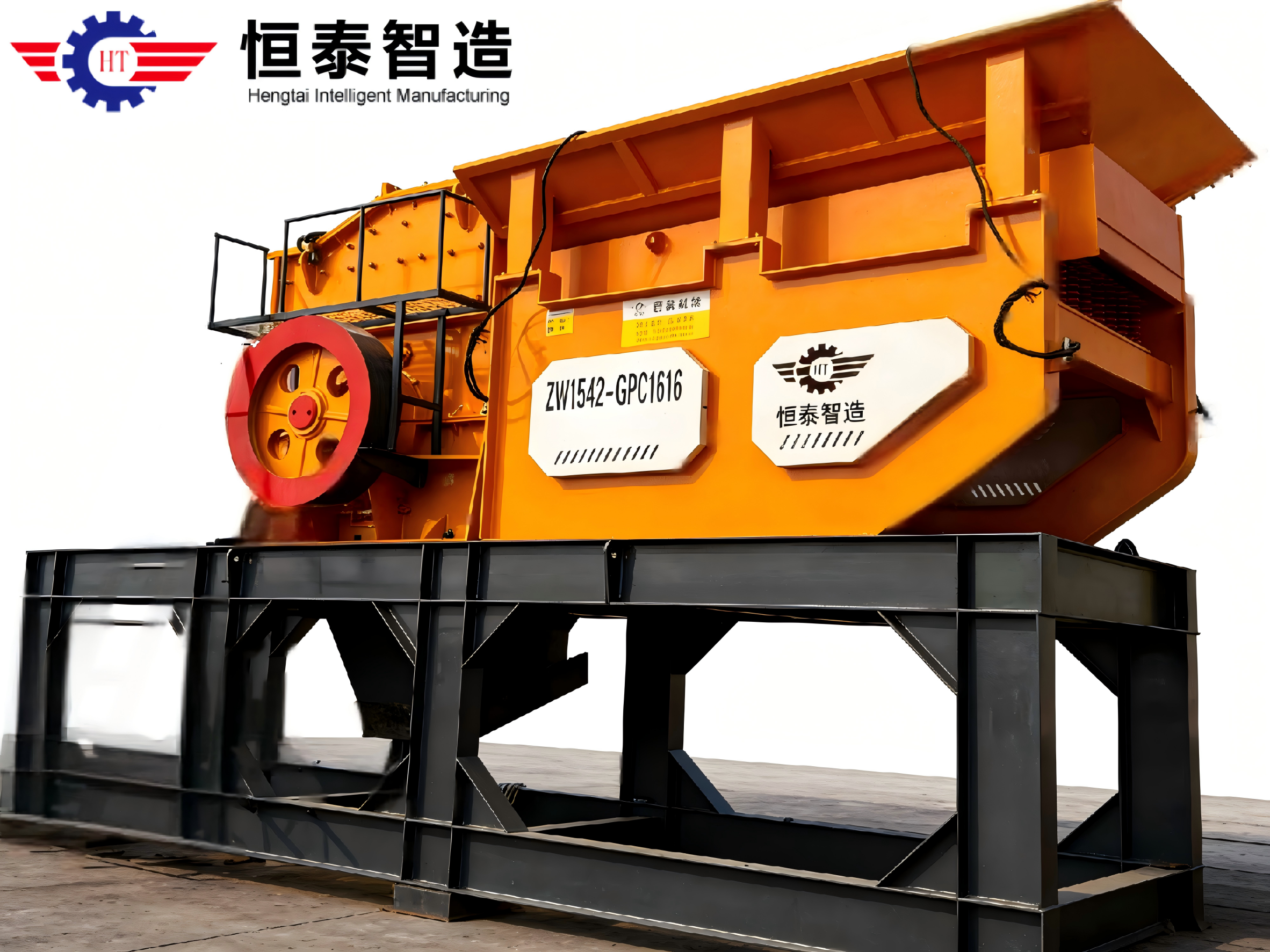
Step 2: Match Material Characteristics
Large, hard materials (e.g., granite):
Choose a heavy-duty trough with wear-resistant liners.Sticky materials (e.g., wet clay):
Select a larger inclination angle (10–15°) with anti-adhesion coating.Fine materials (e.g., manufactured sand):
Opt for a low-frequency, high-amplitude configuration to reduce dust dispersion.
Step 3: Consider System Integration
Ensure hopper outlet dimensions match the feeder inlet size.
Reserve sufficient maintenance space (≥800 mm on both sides).
Account for the discharge height difference to downstream equipment (typically 500–1000 mm).
Conclusion
Next Article Preview:
“How Does the ZW Feeder ‘Vibrate’? — A Visual Guide to the Dual Eccentric Shaft Working Principle”